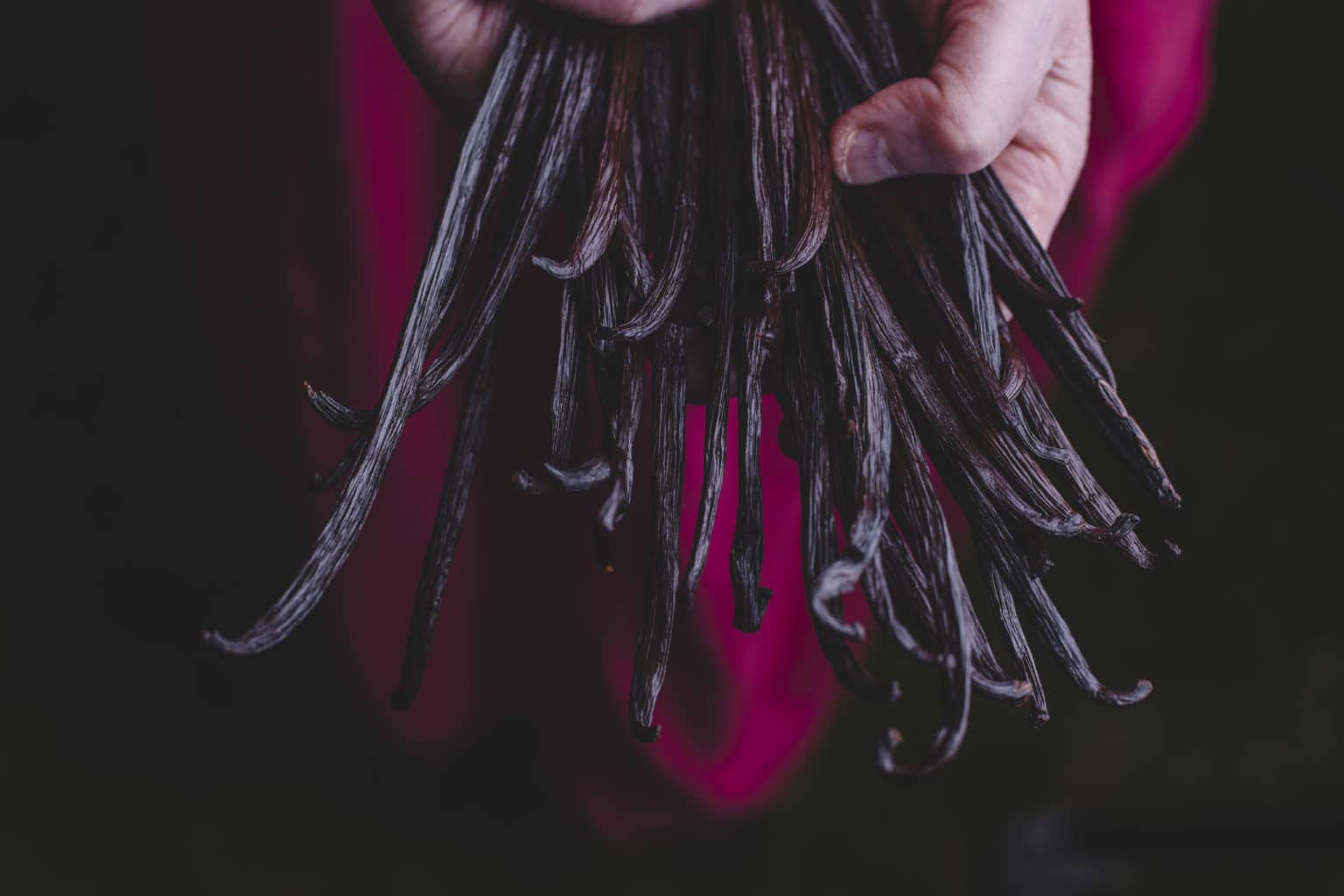
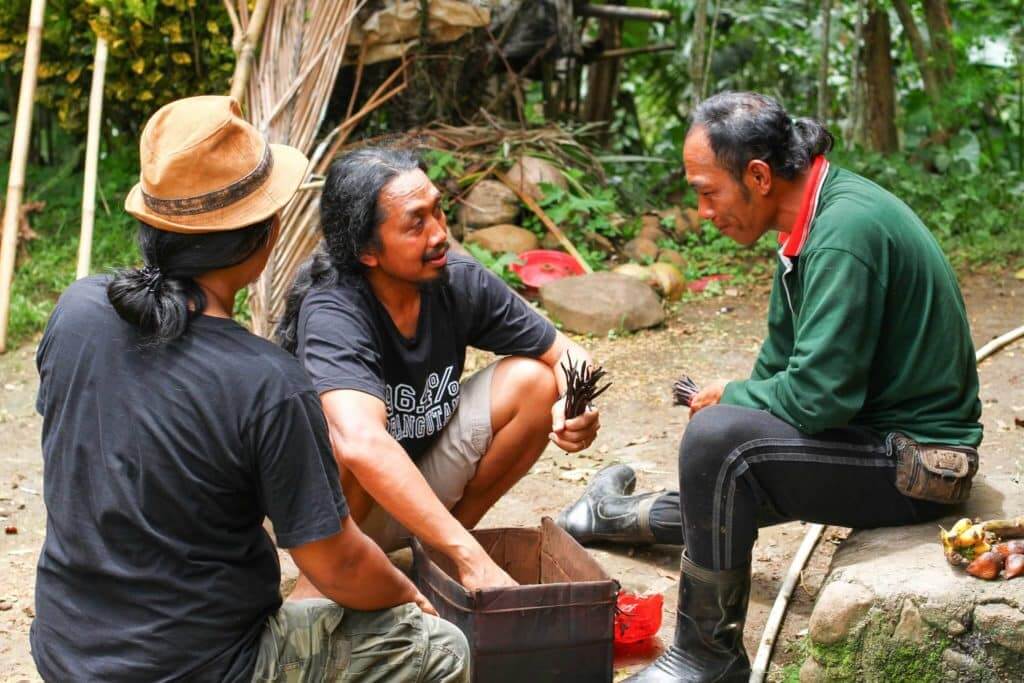
The son of a spice farmer, Dr Made Setiawan now runs his own vanilla plantation as a cooperative community in Bali. A decade ago, he began with just 3,000 seedlings, and now grows about 15,000 mature vanilla plants. Setiawan explains that because this crop isn’t a monoculture, it has potential to restore the land: “From a regenerative and agroforestry perspective, restoration and conservation cannot rely only on one crop. So when we talk about forests, vanilla is just one plant in the forest and it’s very versatile; it can truly be part of a polyculture system and it can grow on many types of trees,” he says.
Vanilla is an orchid – the only one to produce an edible seed pod – that grows as a climbing vine on other supporting trees. Out of 118 species of vanilla, just two of them, plus one hybrid, are cultivated throughout the tropics. Seedlings grow for more than three years before they start flowering.
Incredibly, each yellow vanilla flower blooms for just a few hours between October and January, and farmers hand pollinate the flowers to ensure a high pollination success rate. It takes another nine months for vanilla pods to mature, then pods are dried and conditioned once harvested the following summer. Vanilla farming is slow, labour-intensive and sometimes dangerous. It’s the second most expensive spice in the world after saffron, so theft is a huge issue – many farms have armed guards and specific plantation locations remain undisclosed.