New nectar: could artificial pollen make life sweeter for bees? Guardian
In winter, starved of pollen and lacking natural forage, honeybee colonies can easily falter. But nutritious substitutes may be the answer
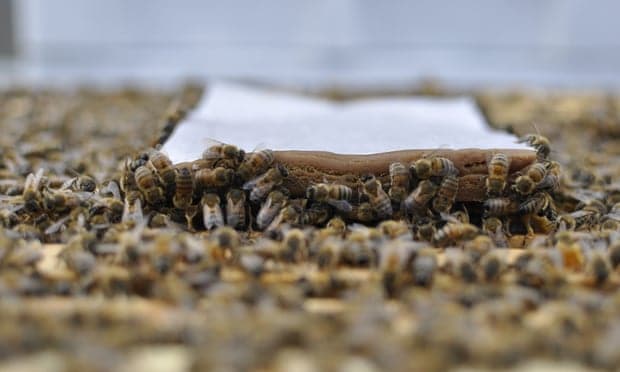
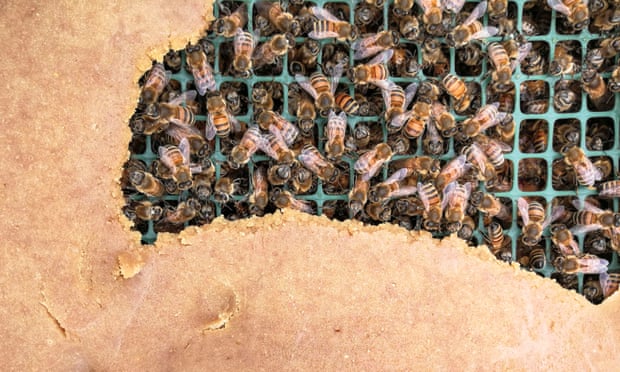
When beekeepers from across the US drive millions of hives on trucks to pollinate California’s almond crops in January, there simply isn’t enough food for them to eat until the million-plus acres of almond trees start to bloom in early spring. California’s booming almond industry has created a vast monoculture, with little natural forage. The honeybees need to be in place to raise their broods before the pollen comes into season, forcing beekeepers to use pollen patty substitutes to keep them alive.
After studying the honeybees used to pollinate almond trees for many years, Prof Geraldine Wright, a biologist at the University of Oxford, realised that unless this pollen substitute was actually tailored to the specific nutritional needs of a honeybee colony, colonies can fail altogether.
“Nobody had done a really careful study of bee nutrition and the qualities of pollen,” says Wright, who has spent the past decade engineering a new bee food based on her knowledge of the intricacies of the honeybee diet. As pollinators, honeybees are fundamental to food systems and are considered a domesticated species. In that vein, Wright says they need their own bespoke feed.
Read the full article here.